
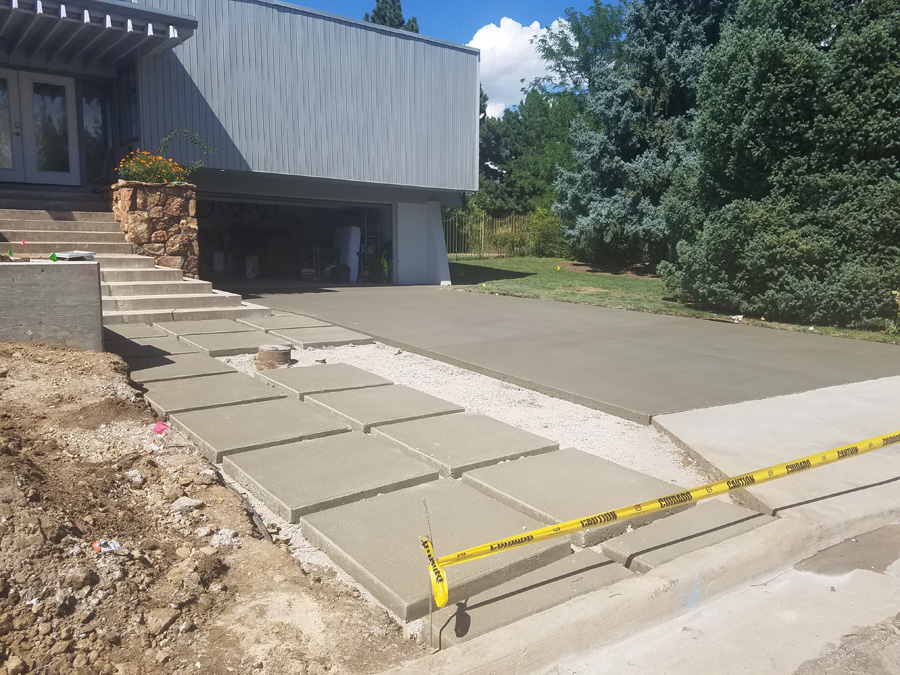
When it is time to install or replace a driveway, one of the biggest decisions homeowners face is choosing between concrete and asphalt.
Both materials can provide a functional residential driveway, but they differ in appearance, maintenance, customization, repair needs, and overall cost. Denver’s changing temperatures and winter conditions also make proper preparation and professional installation important regardless of which material you choose.
Understanding the differences can help you decide which driveway surface makes the most sense for your home, budget, and long-term plans.
What Is a Concrete Driveway?
A concrete driveway is created by preparing the project area, placing concrete, and finishing the surface according to the planned design.
Concrete is especially popular with homeowners who want a clean, finished appearance and the ability to customize the driveway through different colors, textures, and decorative finishes.
Depending on the project, concrete driveways may feature:
- Traditional concrete finishes
- Stamped concrete
- Colored concrete
- Decorative borders
- Custom layouts
- Coordinated concrete walkways
Concrete can therefore serve as both a functional driveway surface and an important part of a home’s exterior design.
What Is an Asphalt Driveway?
Asphalt is another common paving material used for residential driveways.
It creates the familiar dark surface seen on many roads, parking areas, and driveways. Asphalt is generally selected for its straightforward appearance, flexibility, and potentially lower initial installation cost compared with more customized concrete projects.
Asphalt driveways typically have a more uniform appearance and provide fewer decorative options than concrete.
For homeowners focused primarily on creating a functional paved surface, however, asphalt can still be worth considering.
Concrete vs. Asphalt: Appearance
One of the biggest differences between the two materials is design flexibility.
Asphalt generally provides a consistent dark appearance. There are fewer opportunities to dramatically customize the finished surface.
Concrete provides considerably more design flexibility.
A homeowner may choose a basic traditional finish or customize the driveway with:
- Stamped patterns
- Decorative textures
- Concrete colors
- Borders
- Accent areas
- Custom connections to walkways
If curb appeal and exterior design are major priorities, concrete generally provides more options.
Which Driveway Has More Design Options?
Concrete is the clear choice for homeowners who want to personalize the appearance of their driveway.
Stamped and colored concrete can help coordinate the driveway with features such as:
- Exterior siding
- Brick
- Stone
- Landscaping
- Retaining walls
- Front walkways
- Patios
- Other hardscaping
The driveway can also be designed alongside adjoining sidewalks or entrance walkways for a more coordinated front yard.
Asphalt is much more limited in this area.
That does not make asphalt unattractive, but homeowners should expect a simpler and more consistent finished appearance.
Concrete vs. Asphalt: Initial Cost
Cost is often one of the first considerations when choosing a driveway material.
Asphalt can frequently have a lower initial installation cost than concrete, particularly when comparing a basic asphalt driveway with decorative or stamped concrete.
Concrete pricing can vary significantly depending on the size of the driveway, site preparation, removal of existing materials, finish, color, pattern, and overall project design.
Instead of looking only at the initial price, homeowners should also consider:
- Expected maintenance
- Future repairs
- Desired appearance
- How long they plan to own the property
- Whether decorative features are important
- Overall condition of the project area
The least expensive installation is not necessarily the best choice for every homeowner.
Concrete vs. Asphalt: Maintenance
The two materials have different maintenance considerations.
Asphalt surfaces may benefit from periodic sealing as they age. The frequency depends on factors such as pavement condition, climate, exposure, and use.
Concrete does not typically require the same type of routine sealcoating as asphalt, although decorative or stamped concrete may have its own maintenance recommendations.
Both surfaces should still be monitored for cracking, deterioration, drainage concerns, and other signs of wear.
No driveway is completely maintenance-free.
How Denver Weather Affects Driveways
Denver properties experience changing conditions throughout the year, including freezing temperatures, snow, moisture, and warmer summer weather.
Repeated temperature changes can place stress on paved surfaces.
Proper installation matters with both asphalt and concrete.
Important considerations can include:
- Site preparation
- Base conditions
- Drainage
- Proper installation
- Material quality
- Curing or compaction
- Ongoing maintenance
Choosing the right contractor can be just as important as choosing the material itself.
Which Material Handles Cracking Better?
Both concrete and asphalt can develop cracks.
The way those cracks look and how they are repaired can differ.
Asphalt is a more flexible paving material, and certain repairs can often blend more naturally into the existing dark surface.
Concrete repairs may be more visually noticeable, particularly when new material is placed next to older concrete.
However, individual concrete sections can sometimes be addressed without replacing the entire driveway, depending on the damage and layout.
With either material, widespread cracking or movement should be professionally evaluated rather than repeatedly covered with temporary fixes.
Concrete vs. Asphalt Repairs
Repair considerations are another important difference.
Asphalt is commonly repaired through patching, crack treatment, resurfacing, or replacement depending on the condition of the pavement.
Concrete may also be repaired, resurfaced, partially replaced, or completely replaced depending on the extent of deterioration.
The appropriate solution depends less on the material alone and more on factors such as:
- Amount of damage
- Age of the driveway
- Movement
- Surface deterioration
- Condition of the underlying area
- Number of previous repairs
A driveway with one isolated problem may have very different options than a surface showing deterioration throughout.
Which Driveway Is Better for Curb Appeal?
For homeowners focused on curb appeal, concrete usually offers more possibilities.
A fresh traditional concrete driveway can create a clean, polished appearance without becoming overly decorative.
Homeowners who want something more distinctive can consider stamped or colored concrete.
Concrete can also be coordinated with:
- Front entrance walkways
- Sidewalks
- Landscaping
- Garage entrances
- Decorative borders
- Other exterior concrete
Because a driveway often occupies a large portion of the front of a property, changing the surface can have a noticeable effect on the overall appearance of the home.
What About Snow and Winter Maintenance?
Both concrete and asphalt driveways require consideration during Colorado winters.
Snow and ice can accumulate on either surface, and proper winter maintenance is important.
Homeowners should also be mindful of the products and techniques used to manage ice, particularly on concrete surfaces.
Regardless of material, winter performance begins with a properly installed driveway and good drainage.
If you have questions about caring for a new driveway through its first winter, follow the specific recommendations provided by your contractor.
Is Concrete Better for Decorative Homes?
If exterior design is an important part of your project, concrete has a major advantage.
Concrete can be incorporated into a broader hardscape design that includes:
- Stamped driveways
- Colored concrete
- Decorative walkways
- Patios
- Borders
- Entry areas
This can be particularly useful for homeowners completing multiple exterior improvements at once.
Instead of treating the driveway as a separate surface, it can become part of the overall design of the property.
When Asphalt May Be the Better Choice
Asphalt may be worth considering if your priorities include:
- A straightforward paved surface
- A darker traditional appearance
- Lower initial project costs
- Simpler repair options
- Limited interest in decorative customization
The best material depends on the property and homeowner.
There are situations where asphalt may make practical sense, particularly when decorative appearance is not a major consideration.
When Concrete May Be the Better Choice
Concrete may be a better fit when you prioritize:
- Curb appeal
- Design flexibility
- Stamped finishes
- Colored concrete
- A clean traditional appearance
- Coordination with sidewalks or walkways
- A driveway that becomes part of the home’s exterior design
Concrete can be particularly appealing when homeowners are already investing in landscaping, exterior renovations, or other concrete improvements.
What If You Already Have an Asphalt Driveway?
Having an asphalt driveway does not necessarily mean you need to replace it with asphalt again.
When an older driveway reaches the point where replacement is necessary, homeowners can consider whether they want to keep the existing material or switch to concrete.
Changing materials may give you an opportunity to rethink:
- Driveway appearance
- Layout
- Walkway connections
- Decorative finishes
- Front yard design
The existing driveway and site conditions should be evaluated before deciding how to move forward.
What If Your Existing Concrete Driveway Is Damaged?
Similarly, damaged concrete does not automatically mean that an entire driveway needs replacement.
Repair or resurfacing may be possible when deterioration is limited.
When widespread cracking, uneven sections, deteriorated surfaces, or repeated repairs affect a significant portion of the driveway, complete replacement may make more sense.
If replacement becomes necessary, homeowners can either recreate a traditional driveway or use the project as an opportunity to upgrade to stamped or colored concrete.
Concrete or Asphalt: Which Is Better?
There is no single material that is best for every home.
Asphalt may be attractive to homeowners who want a straightforward paved driveway and are prioritizing initial cost.
Concrete may be more appealing to homeowners who value design flexibility, curb appeal, decorative options, and coordination with other concrete around the property.
Before choosing, compare the factors that matter most to you:
- Budget
- Appearance
- Maintenance
- Repair considerations
- Customization
- Existing property design
- Long-term plans for the home
A professional contractor can also evaluate your property and help explain which options are practical for the project area.
Planning a New Concrete Driveway in Denver?
If concrete is the right fit for your property, Sunny Day Concrete can help you plan your new driveway.
With more than 25 years of experience, Sunny Day Concrete provides new concrete driveway installation, driveway replacement, stamped concrete, colored concrete, repair, and other residential concrete services throughout Denver and the surrounding metro area.
Whether you are replacing an aging driveway or creating something entirely new, our team can evaluate your property and discuss the options available.
Call Sunny Day Concrete at (720) 495-8051 or contact us online today to request your free concrete driveway estimate.
Meta Title: Concrete vs. Asphalt Driveways in Denver: Which Is Better?
Meta Description: Compare concrete vs. asphalt driveways for Denver homes, including cost, maintenance, appearance, repairs, weather, and design options.
Excerpt: Choosing between concrete and asphalt for a Denver driveway? Compare appearance, maintenance, durability, repair needs, and cost considerations to see which paving material may be the better fit for your home, property, budget, and long-term plans today.