
| Proof of Experience: Sunny Day Concrete is a family-owned concrete contractor based in Commerce City, Colorado, with more than 25 years of experience in the Denver metro and an A+ BBB rating. Specialty: residential and commercial flatwork, driveways, patios, stamped concrete, retaining walls and parking areas built for Colorado freeze-thaw conditions. Verified profile: About Sunny Day Concrete |
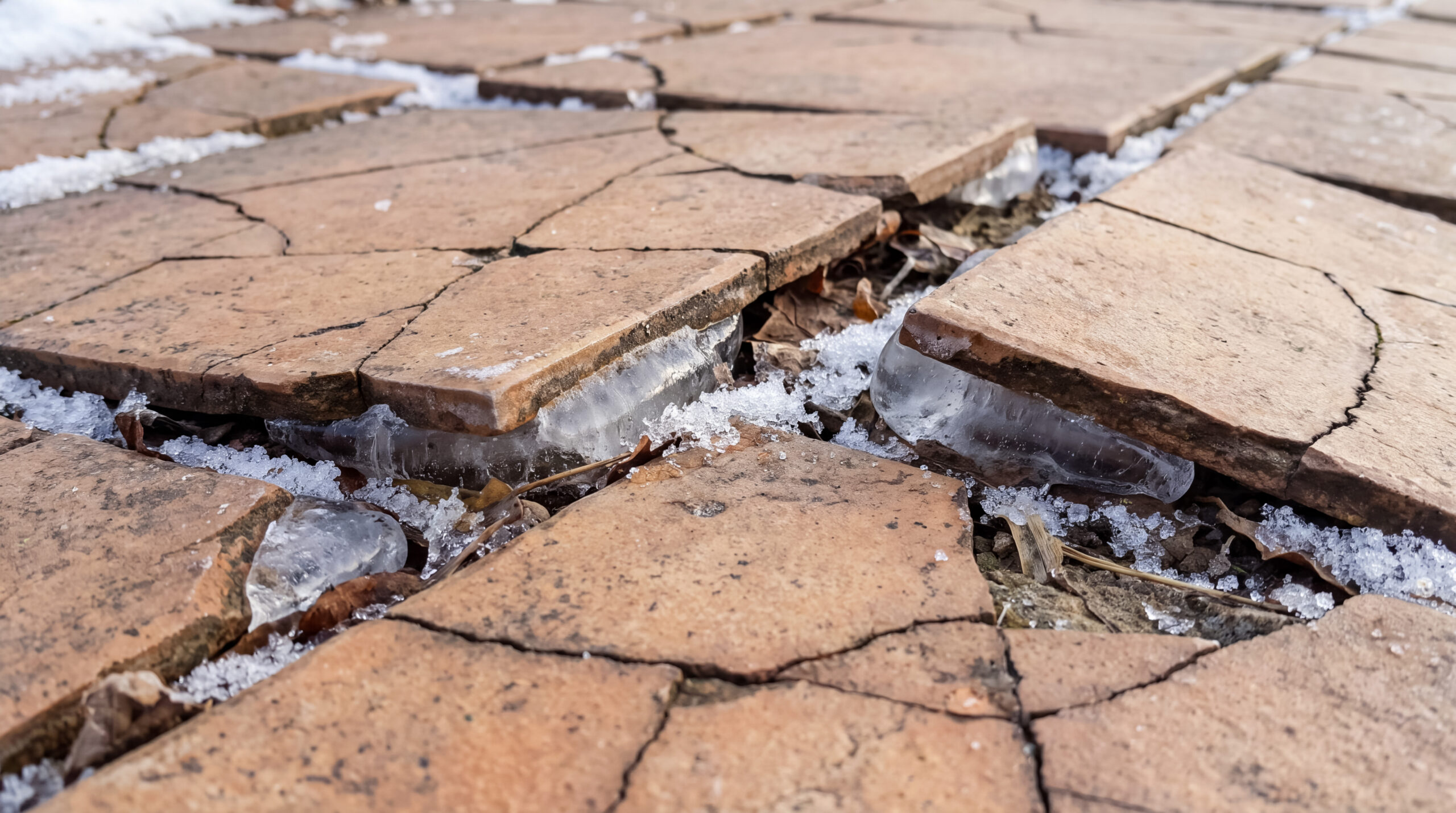
Freeze-thaw concrete damage is the reason a driveway that looked fine in October can be flaking by March. Denver winters routinely swing between sunny afternoons above freezing and nights well below it, and every swing works water deeper into the surface. At Sunny Day Concrete, we’ve poured and repaired concrete across the metro for more than 25 years, and most winter damage traces back to the same chain of events. Here is how it unfolds, and where in that chain you can stop it.
Stage 1: Water Gets Into the Pores
Hardened concrete looks solid, but it is full of tiny capillary pores. Snowmelt, sprinkler overspray, and standing water soak into those pores, and the wetter the surface stays, the more saturated the top layer becomes. Slabs that hold water (low spots, flat areas, edges where downspouts dump) saturate first.
Stage 2: The Water Freezes and Expands
Water expands by about 9 percent when it turns to ice. Inside a saturated pore, that expansion has nowhere to go, so it pushes against the surrounding cement paste. One cycle does little. Dozens of cycles every winter, year after year, open microcracks near the surface.
| Industry Warning: Deicers make this stage worse, not better. Melting snow on the slab during the day means more liquid water in the surface, which refreezes at night. Salts also raise the saturation of the top layer. The result is more freeze-thaw cycles at the exact depth where scaling starts. |
Stage 3: The Surface Lets Go
Once enough microcracks link up, pieces of the surface separate. The damage takes a few recognizable forms:
| Damage type | What it looks like | Usual driver |
|---|---|---|
| Scaling | Thin flakes peeling off, exposing coarse aggregate | Freeze-thaw plus deicers on a weak or non-air-entrained surface |
| Spalling | Deeper chips or chunks, often at edges and joints | Freeze-thaw, impact, or corroding steel close to the surface |
| Pop-outs | Small cone-shaped pits with a broken aggregate piece at the bottom | Porous aggregate particles that absorb water and expand |
| D-cracking | Fine, closely spaced cracks running parallel to joints | Freeze-thaw-susceptible coarse aggregate deeper in the slab |
Stage 4: Damage Speeds Up
A scaled surface is rougher and more porous than the original finish, so it holds more water the next winter. That’s why scaling tends to spread outward from where it starts. Once the coarse aggregate is exposed across a large area, the conversation shifts from prevention to repair or replacement. Our post on whether a Denver slab needs repair or replacement covers that decision, and our concrete repair and resurfacing services page explains how we evaluate damaged surfaces.
Where to Break the Chain: Prevention by Build Stage
Almost all freeze-thaw protection is decided before and during the pour. Sealers and careful winter habits help, but they can’t fix a surface that was built weak.
Mix Design
Air entrainment is the single most important defense. An air-entraining admixture creates billions of microscopic, evenly spaced air bubbles in the paste. When water freezes, those bubbles act as relief chambers for the pressure. Exterior concrete in freeze-thaw climates is specified with entrained air, and ACI 318 assigns higher minimum strength and lower maximum water-to-cement ratios to the freeze-thaw exposure classes. Ask your contractor what air content and strength they specify for exterior flatwork.
Placement and Finishing
- No water added on site to make the mix easier to place. Extra water weakens the paste and raises permeability.
- No finishing while bleed water is on the surface. Working bleed water back in leaves a weak top layer that scales.
- Avoid over-troweling exterior air-entrained concrete, which can reduce the air content right at the surface. Broom finishes are common on driveways and walks for this reason and for traction.
Curing
Concrete gains strength through hydration, which needs moisture and moderate temperature. Curing compounds, blankets, or wet curing help the surface develop the strength it needs before its first freeze.
Drainage
Slope slabs so water runs off rather than sitting. Direct downspouts away from concrete. A surface that drains dries faster and never reaches full saturation.
The Riskiest Season: A Slab’s First Winter
A slab poured in late fall faces its first freeze before it has much time to dry out and gain strength. That combination makes the first winter the riskiest. Our concrete care and maintenance guide covers the routine in full: skip chemical deicers during the first winter and use clean sand for traction instead. A penetrating water-repellent sealer can also lower water absorption once the manufacturer’s cure period has passed.
What to Do Based on Where You Are
- You’re planning new concrete: ask for air-entrained exterior mix, a proper cure, and a slope that drains, in writing on the bid.
- Your slab is under a year old: keep deicers off it and use sand.
- Light scaling has started on a sound slab: fix the drainage and reduce deicer use before you consider resurfacing.
- Scaling covers large areas or the slab is also cracked and settling: get an evaluation for replacement.
Key Takeaway
Freeze-thaw damage is a water problem first. Keep water out of the surface with a well-drained slab, block its expansion with entrained air, and give the surface a full cure before winter. Those three steps prevent most of the flaking and crumbling Colorado homeowners see each spring.
Have Winter Damage You Want Checked?
If your driveway, patio, or walk is flaking or crumbling, we’ll look at the whole surface and tell you what’s driving it. Schedule a free concrete evaluation with our team.