
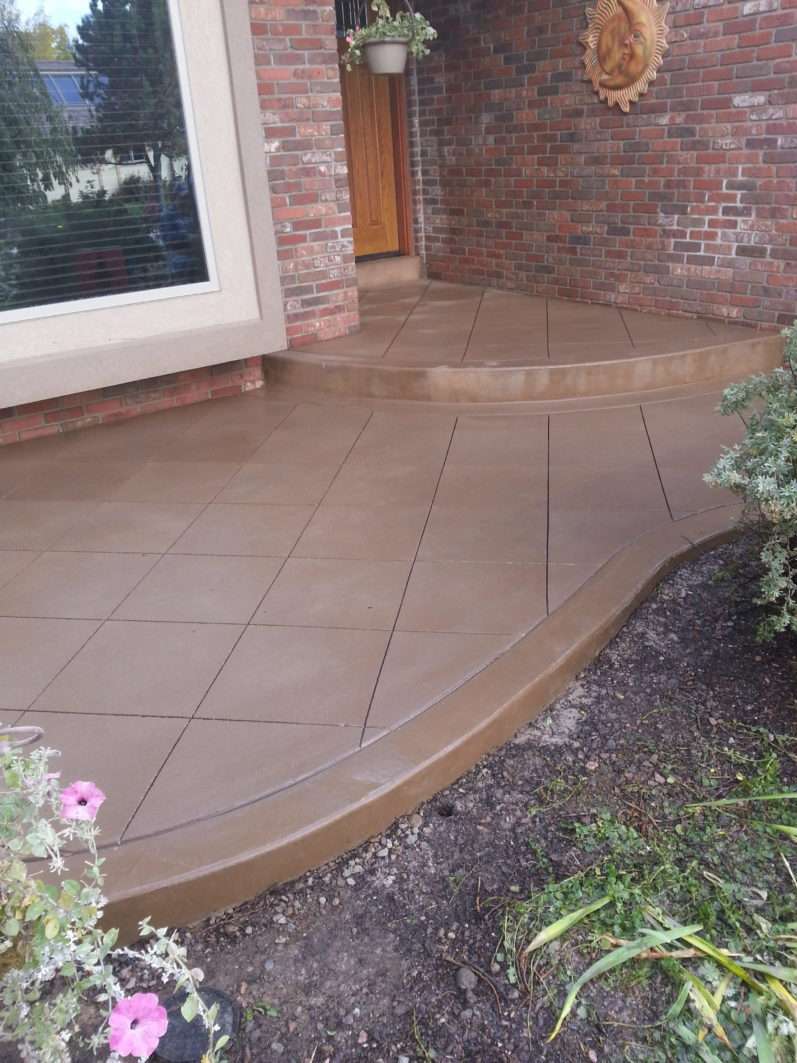
A concrete patio can be much more than a simple slab outside your back door. With the right layout, finish, and surrounding features, it can become a functional outdoor living area that feels like a natural extension of your home.
For Denver homeowners, concrete offers plenty of flexibility when planning a new patio or replacing an older surface. You can keep the design simple and traditional or incorporate stamped patterns, color, walkways, decorative borders, and custom layouts.
If you are looking for inspiration before starting your project, here are seven concrete patio ideas to consider for your backyard.
1. Create a Stamped Concrete Patio
Stamped concrete is one of the easiest ways to make a patio feel more customized.
Instead of leaving the surface with a traditional concrete finish, stamping introduces patterns and textures that add visual interest to the space.
A stamped patio can work well for homeowners who want the concrete itself to become part of the backyard design.
Depending on the project, stamped concrete can be used across the entire patio or incorporated into selected areas as an accent.
It can also be paired with colored concrete to create a more distinctive finished look.
If your backyard is highly visible from inside the home or serves as your primary outdoor entertaining space, stamped concrete can help make the patio feel more intentional.
2. Add Color to the Concrete
Traditional gray concrete works well for many homes, but it is not the only option.
Colored concrete can help the patio coordinate with other exterior features, such as:
- Siding
- Brick
- Stone
- Landscaping
- Retaining walls
- Fencing
- Outdoor furniture
- Existing hardscaping
The goal does not necessarily have to be creating a bold color.
Even a more subtle decorative finish can help the patio feel better connected to the rest of the property.
Color can also be combined with stamped concrete when homeowners want additional texture and visual detail.
3. Design Separate Outdoor Living Zones
If you have enough backyard space, consider designing the patio around how you actually plan to use it.
Instead of creating one large open surface, the layout can visually organize different activities.
For example, your patio might include a dedicated area for:
- Outdoor dining
- Grilling
- Lounge furniture
- Entertaining
- Planters
- Fire features
- General seating
Creating separate zones can make a larger patio feel more purposeful.
Furniture placement can help define these areas after installation, but the shape and layout of the concrete can also influence how naturally each space functions.
Before deciding on patio dimensions, think about what furniture and activities you want the finished space to accommodate.
4. Connect the Patio With Concrete Walkways
A patio does not have to function as an isolated surface.
Adding concrete walkways can help connect the outdoor living area to other parts of your property, such as:
- Driveways
- Side yards
- Backyard gates
- Garages
- Gardens
- Storage areas
- Other outdoor spaces
This can make the backyard easier to navigate while also creating a more complete hardscape design.
Walkways can use the same finish as the patio for a consistent appearance or a complementary finish for additional contrast.
For example, a stamped patio might connect to simpler traditional concrete walkways.
Planning these surfaces together can help the overall project feel more coordinated.
5. Use Decorative Borders or Accents
You do not necessarily have to choose between a completely traditional patio and a fully decorative one.
Decorative borders and accent areas can provide a middle ground.
For example, a traditional concrete patio may be surrounded by a stamped or colored border. Decorative concrete could also be incorporated around the perimeter or used to visually separate different areas of the patio.
This approach can help homeowners introduce custom details without making the entire surface decorative.
Borders may also help connect the patio visually with other concrete features around the property.
If you like the look of stamped concrete but prefer a more restrained design, using it as an accent can be worth considering.
6. Expand an Existing Patio
Sometimes the biggest problem with an existing patio is not its appearance. It is simply too small.
A small concrete patio may work for a few chairs but quickly feel crowded once you add a table, grill, planters, or additional seating.
Depending on the condition and layout of the existing concrete, homeowners may consider expanding the outdoor living area.
Additional patio space can provide room for:
- Larger dining sets
- Outdoor kitchens or grills
- Lounge furniture
- Entertaining guests
- Multiple seating areas
- Planters and decorative features
If the current patio is also aging or damaged, complete replacement may provide an opportunity to redesign the entire area instead of simply adding more concrete to an outdated layout.
Think about how much space you realistically need rather than only replacing what is already there.
7. Coordinate the Patio With the Rest of Your Backyard
One of the best patio design ideas is also one of the simplest: look beyond the patio itself.
The most successful outdoor spaces usually feel connected to the rest of the property.
Before selecting the size, shape, or finish, consider the surrounding:
- Landscaping
- Walkways
- Retaining walls
- Home exterior
- Fencing
- Garden areas
- Outdoor structures
- Existing concrete
For example, if the backyard already includes decorative stone or textured landscaping features, a stamped concrete patio may complement those elements.
If the property has a clean, modern appearance, a simpler concrete finish may work better.
Your patio does not have to be the most noticeable feature in the yard. It should feel like it belongs there.
Traditional or Decorative Concrete?
One of the biggest decisions when planning a patio is determining how decorative you want the finished surface to be.
Traditional concrete can be an excellent option when you want:
- A simple appearance
- A neutral background
- A clean finished surface
- A more straightforward patio design
Stamped or colored concrete may make more sense when you want:
- More visual character
- Custom patterns
- Texture
- Color
- Decorative borders
- A patio that serves as a design feature
There is also no rule saying every surface has to use the same finish.
Combining traditional and decorative concrete can create a balanced design and help highlight specific areas of the backyard.
Think About Patio Size Before Installation
Homeowners sometimes focus heavily on the concrete finish and forget about the importance of patio dimensions.
A beautiful patio may still feel uncomfortable if it does not provide enough room for the way you plan to use it.
Before settling on a size, think about:
- How many people typically use the space
- The size of your outdoor furniture
- Whether you need space for a grill
- Walking room around furniture
- Future outdoor additions
- Connections to walkways
- How much backyard space you want to preserve
Planning around real furniture dimensions can be particularly helpful.
A dining table, chairs, grill, and walkway space can take up considerably more room than they appear to when imagining the project without measurements.
Should You Replace an Existing Concrete Patio?
If you already have a patio, you may not need to start from scratch.
Minor surface issues may sometimes be repairable depending on the condition of the concrete.
However, replacement may be worth considering when you are dealing with:
- Widespread cracking
- Significant deterioration
- Uneven sections
- An outdated layout
- A patio that is too small
- Multiple damaged areas
Replacement can also make sense when you want to significantly change the design.
Instead of recreating the old patio, you may be able to adjust its size, shape, finish, and connections to other outdoor areas.
Plan Your Patio Around Denver’s Seasons
A Denver backyard may be used differently throughout the year.
During warmer months, the patio may become a primary entertaining or dining space. During colder months, it will still remain exposed to snow, moisture, freezing temperatures, and changing weather conditions.
That makes proper planning and professional installation important regardless of the decorative style you select.
The appearance of a patio matters, but so do site preparation, layout, drainage considerations, installation, and proper curing.
A well-planned patio should balance design with everyday function.
Start With the Way You Want to Use the Space
With so many patio options available, it can be easy to focus on patterns and colors before deciding what you actually need.
Start with function.
Ask yourself:
How many people will regularly use the patio?
Will you eat outside?
Do you need space for a grill?
Do you entertain?
Will the patio connect to another part of the yard?
Do you want the concrete to stand out or blend into the landscape?
Once those questions are answered, decisions about size, layout, stamped finishes, colors, and walkways become much easier.
Planning a Concrete Patio in Denver?
Whether you are envisioning a simple traditional patio or a custom outdoor living area with stamped concrete, color, decorative accents, and connecting walkways, Sunny Day Concrete can help bring the project together.
With more than 25 years of concrete experience, Sunny Day Concrete provides concrete patio installation and replacement throughout Denver and the surrounding metro area.
Call Sunny Day Concrete at (720) 495-8051 or contact us online today to request your free concrete patio estimate.
Excerpt: Planning a new backyard patio? Explore seven concrete patio ideas for Denver homes, including stamped finishes, colored concrete, custom layouts, walkway connections, decorative borders, and practical ways to create a more inviting outdoor living space.