
Concrete Driveway Care & Maintenance
Practical guidance for protecting new concrete, removing surface stains, managing winter exposure and monitoring changes in driveways, patios and walkways.
NEW CONCRETE CARE
Curing & Returning Concrete to Service
New concrete needs suitable moisture and temperature conditions as it gains strength. A surface that looks dry is not a reliable signal that it is ready for vehicles or heavy items.
Before the crew leaves, ask for the project’s return-to-use and care instructions. Leave protective materials in place as directed, and check before moving furniture onto the surface or beginning any cleaning or sealing.
Before You Use the Surface
✓
Confirm when walking, furniture and vehicle use can resume.
✓
Ask which curing or protective treatment was used.
✓
Keep the finish and sealer information for future care.
✓
Contact the installer if protection is disturbed or you are unsure what to do next.
ROUTINE CONCRETE MAINTENANCE
Cleaning Concrete & Removing Surface Stains
01
Remove Leaves, Dirt & Debris
Sweep leaves, grit and dirt from the surface. Pay attention to corners and low areas where debris collects.
02
Address Oil & Grease Spills
Oil and grease are easier to address before they sit. Follow a cleaner’s directions and contain oily residue so it is not washed into the street or garden.
03
Use Appropriate Cleaning Methods
Start with a gentle approach and a suitable brush. Ask before using aggressive cleaners or pressure washing, especially on new, decorative or sealed concrete.
04
Check Cleaner & Sealer Compatibility
Knowing the finish and sealer makes later maintenance easier. Check compatibility and test cleaning products in an inconspicuous area as directed.
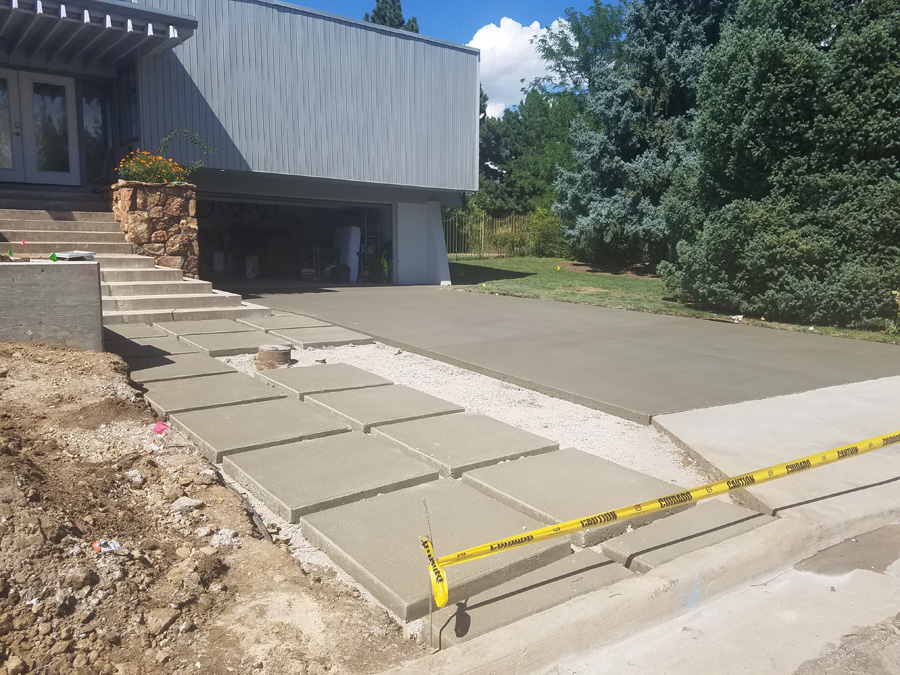
WINTER DRIVEWAY MAINTENANCE
Snow Removal, Deicers & Surface Scaling
Deicing chemicals can contribute to surface scaling, particularly on new concrete. NRMCA recommends avoiding them during the first winter and using clean sand for traction.
Remove snow carefully and ask which winter products are suitable for your surface. When conditions allow, remove accumulated road salts tracked onto driveways or garage slabs; avoid creating runoff that could refreeze.
✓
Use clean sand when additional traction is needed.
✓
Check product guidance before applying a deicer.
✓
Notice recurring standing water and discuss it with your contractor.
CONCRETE CONDITION ASSESSMENT
Evaluating Cracks, Flaking & Uneven Concrete
Concrete can crack as conditions change; a crack alone does not tell you its cause or the right response. Note where a change appears and whether it is progressing.
Take photos of new flaking, changes in level or water collecting in a new place. Share those observations before applying a patch, coating or resurfacing product. An assessment can help determine whether maintenance, repair or replacement is appropriate.
Document What You See
✓
Photograph the whole area and a closer view.
✓
Record when you first noticed the change.
✓
Describe movement, pooling water or winter-product use.
✓
Ask for an assessment before choosing a treatment.
CONCRETE SURFACE PROTECTION
Concrete Sealers & Resealing Requirements
The appropriate sealer and application conditions depend on the surface and product. Ask what was used originally, whether resealing is appropriate and what preparation is required. Follow the manufacturer’s directions instead of relying on a universal annual schedule.
TECHNICAL RESOURCE
Surface Protection Guidance
Review the relevant product and installer guidance before applying a cleaner, coating or sealer.
FREQUENTLY ASKED QUESTIONS
Concrete Maintenance Questions
Cleaning methods, sealer compatibility and curing requirements depend on the concrete surface. Follow the product and installer instructions for your project.
When can I drive on my new driveway?
Use the return-to-service timing provided for your particular project. Concrete strength development depends on the mix and conditions, so a general calendar rule should not replace the installer’s instructions.
Can I pressure-wash my concrete?
Check first, particularly for new concrete, decorative finishes or sealed surfaces. Ask about a suitable cleaning method and follow the equipment, cleaner and sealer directions.
How often should a concrete driveway be resealed?
There is no single interval that suits every surface and sealer. Keep the product information from your project and ask about the appropriate inspection, preparation and reapplication guidance.
Does cracked concrete need repair or replacement?
The appropriate treatment depends on the cause of the cracking, the condition of the slab and how the area is used. Provide photographs and describe any movement, drainage problems or changes over time when requesting an assessment.
Do you offer concrete repair and replacement?
Yes. Sunny Day Concrete offers residential concrete repairs, resurfacing and driveway replacement. Contact us with the location, surface type and conditions you would like assessed.
REQUEST AN ESTIMATE
Need Help With Existing Concrete?
Contact Sunny Day Concrete about cracks, surface deterioration, repair, resurfacing or replacement. Include the location and photographs when available.